Pravila igre / The Rules of the Game (2024–)
![]()
![]()
![]()
![]()
![]()
![]()
![]()
![]()
![]()
![]()
![]()
Lucija Rosc belongs to the generation often called “emerging” in the art world (although it is not entirely clear when exactly the transition into “established” occurs, or if there might be anything in between) – which, coincidentally, I also happen to belong to. Our generation shares a number of traits: we are overwhelmed by environmental anxiety and financial instability, by the alarming drift into political conservatism, and by the nonexistence of affordable housing. Characteristically, we do not march toward “adulthood” with the most confident of steps, and find the boundary between youth and maturity hazy at best, if not downright invisible. In this vein Rosc’s new project plays with the idea that the rules we live by are malleable and unstable, and that the concept of uninhibited play might be transferrable into adulthood.
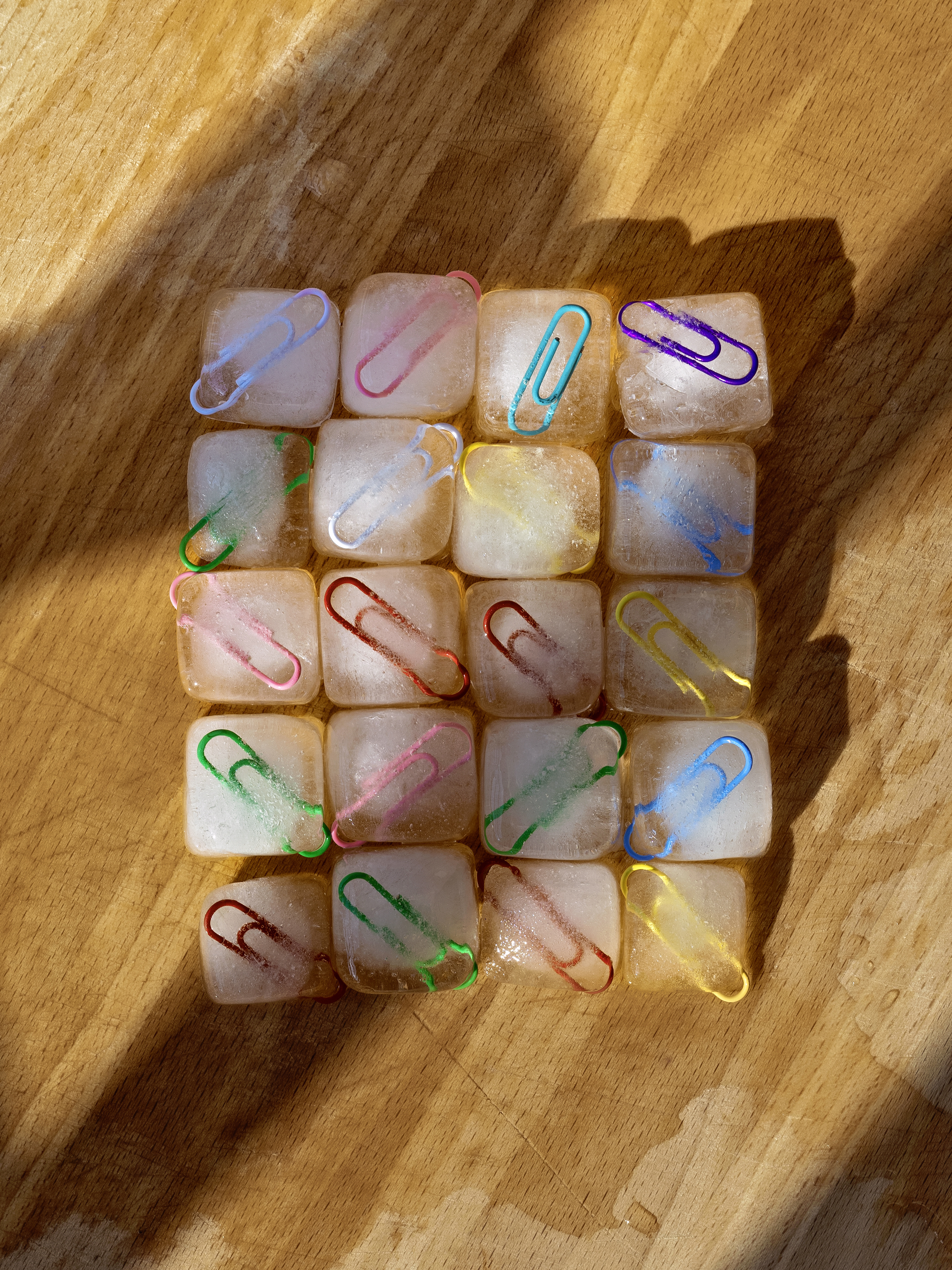
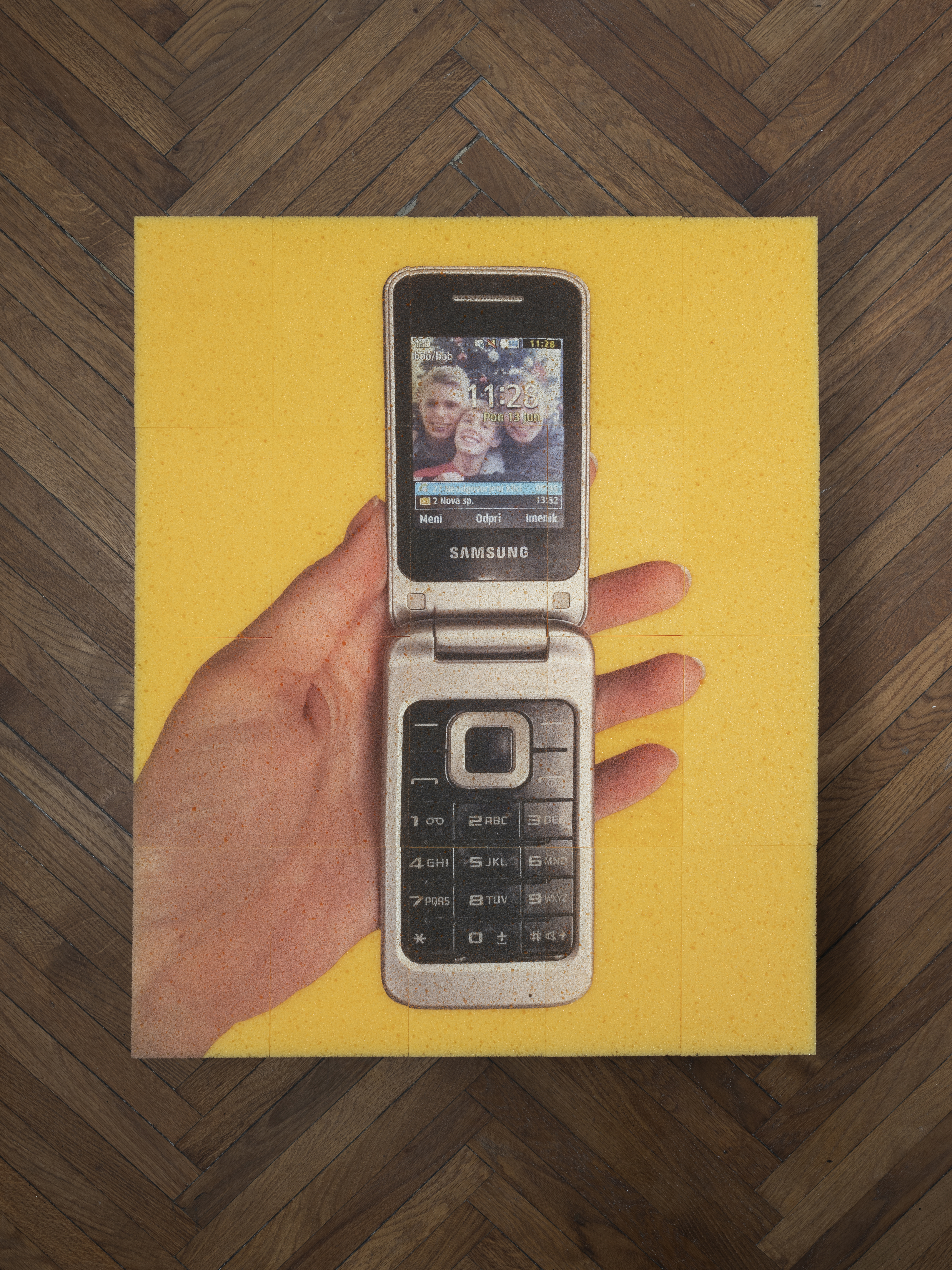
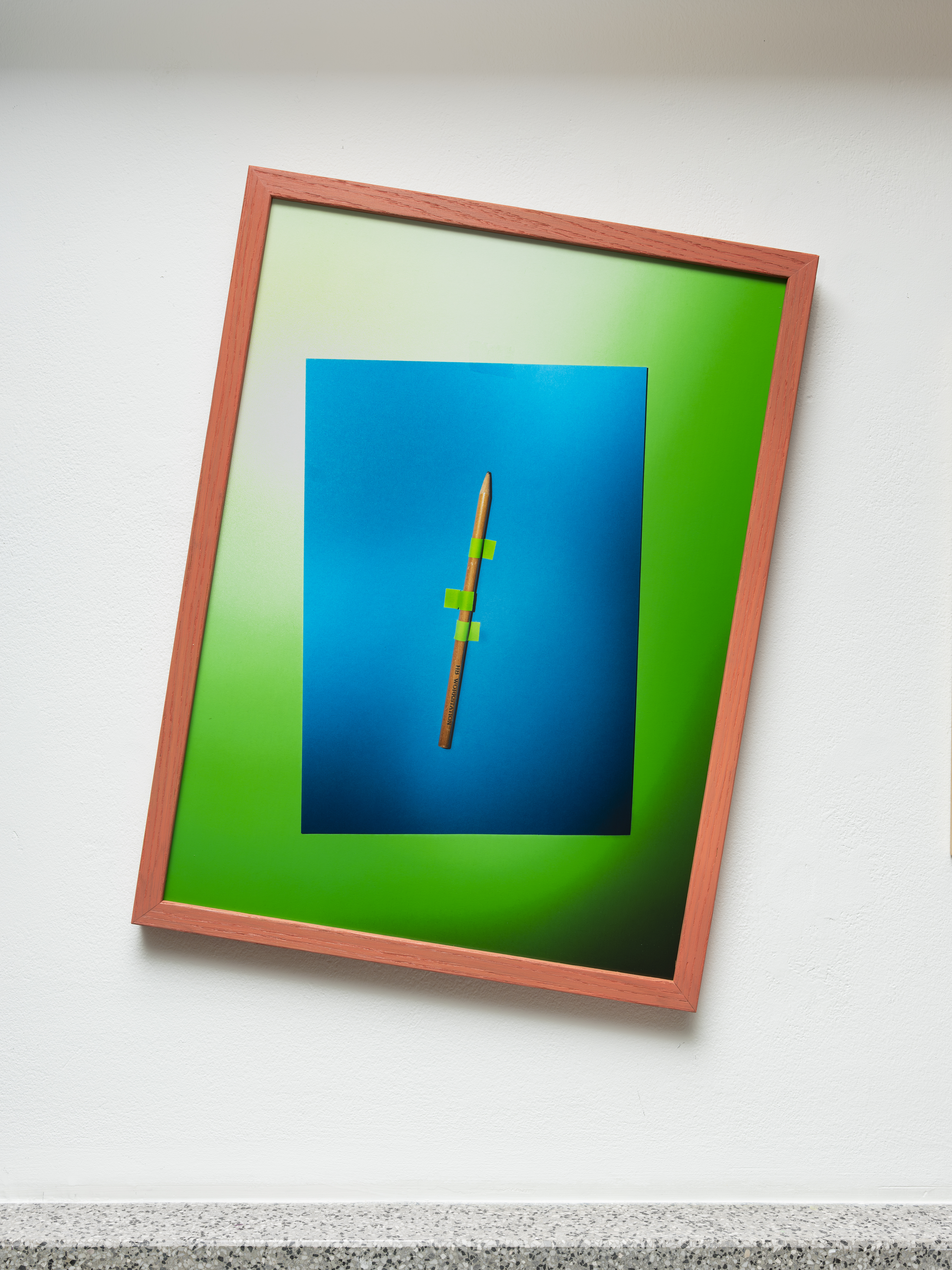
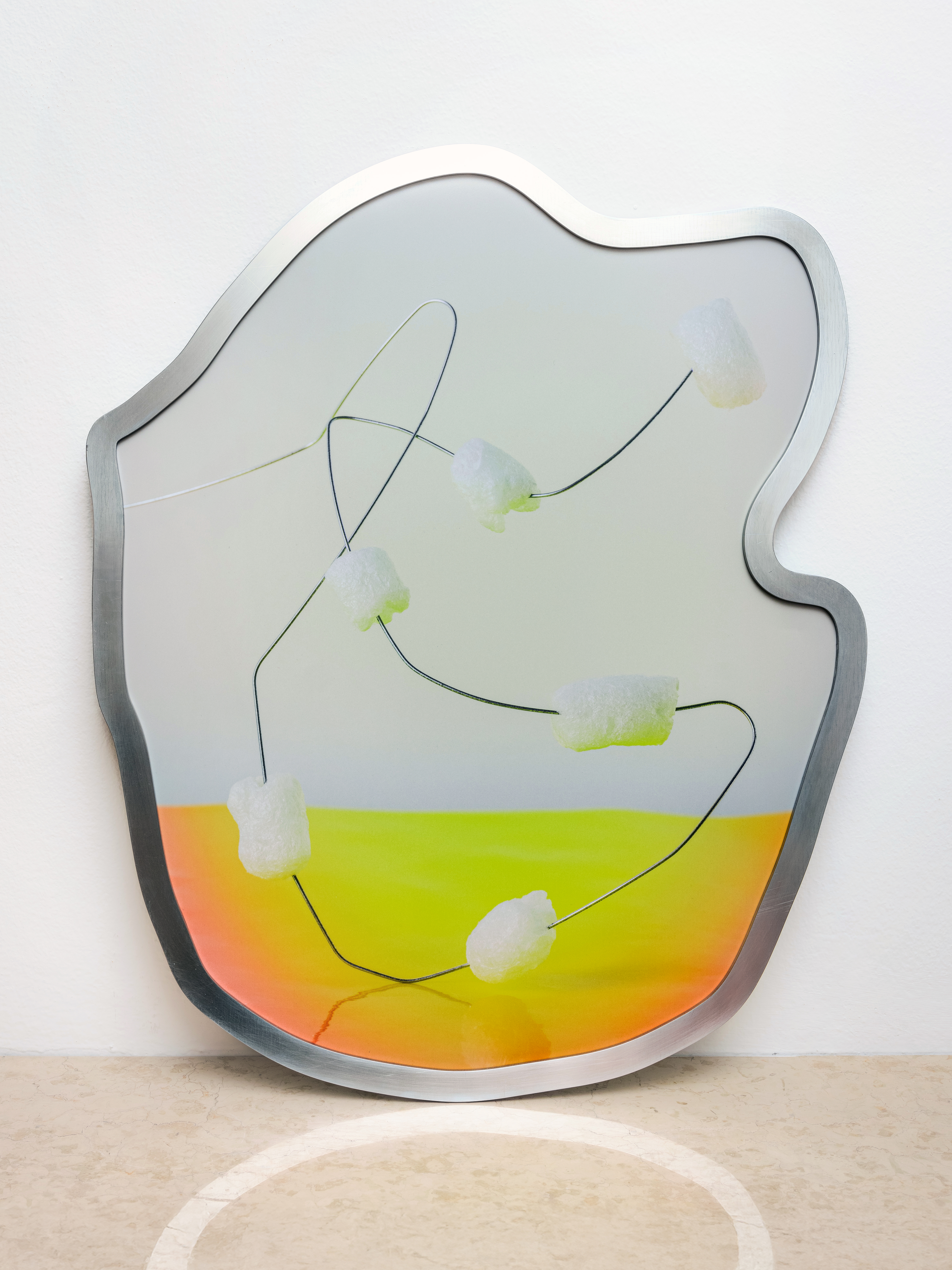
Rosc’s photographic practice is an open process of constantly changing materials, techniques, and methods. Nonetheless, her projects have at least one common denominator: she always approaches her subjects with humor and play, transforming even serious topics into associative images one can easily relate to. In the works shown in Moderna galerija, the artist continues to explore her memories (a frequent subject in her practice) and to experiment with elevating humble, everyday objects into monumental versions of themselves. This time, she is focusing on spaces that occupy a kind of transitional position, such as the school – a place intended for structured learning and the acquisition of skills on the one hand, and on the other, for play and leisure. Moreover, it is a place that represents a boundary between different stages in life. Through this contradictory space of expectation, the artist questions her own attitude to the past and the rules it imposed on her.
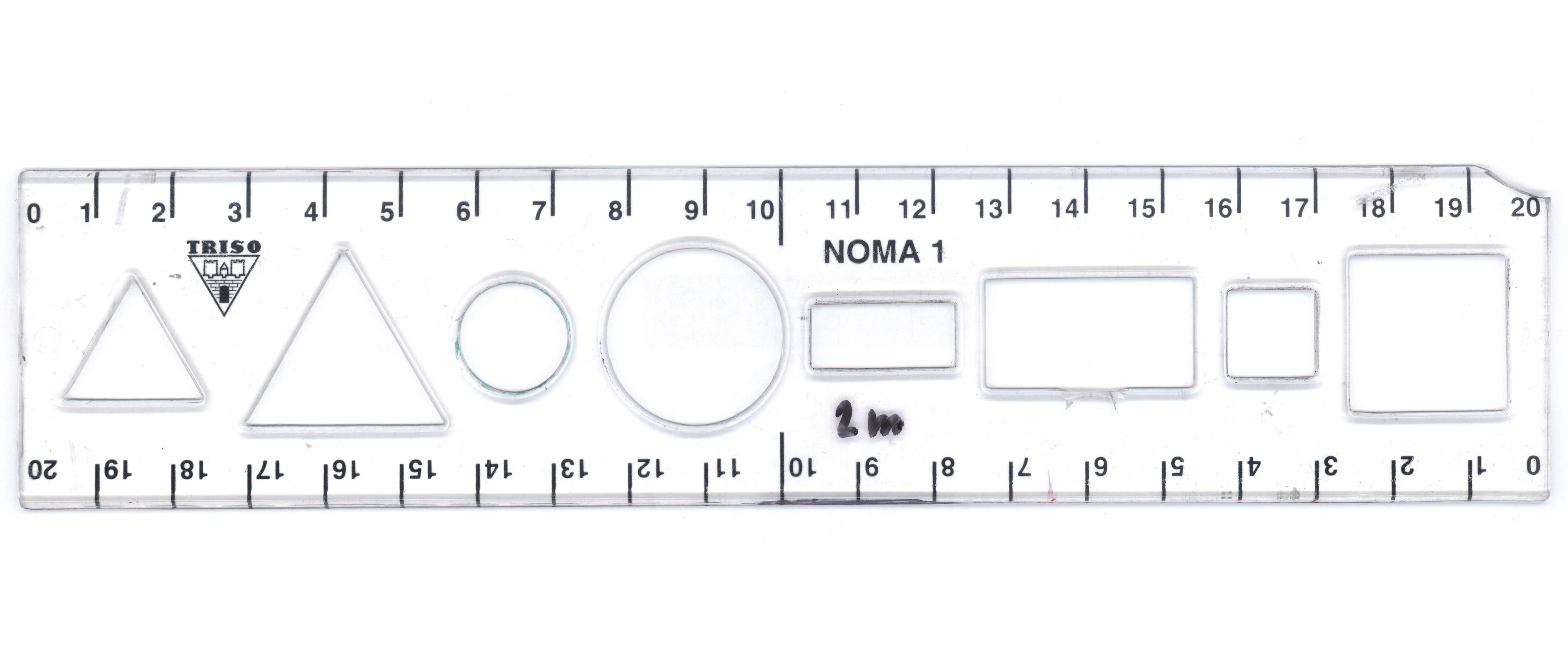
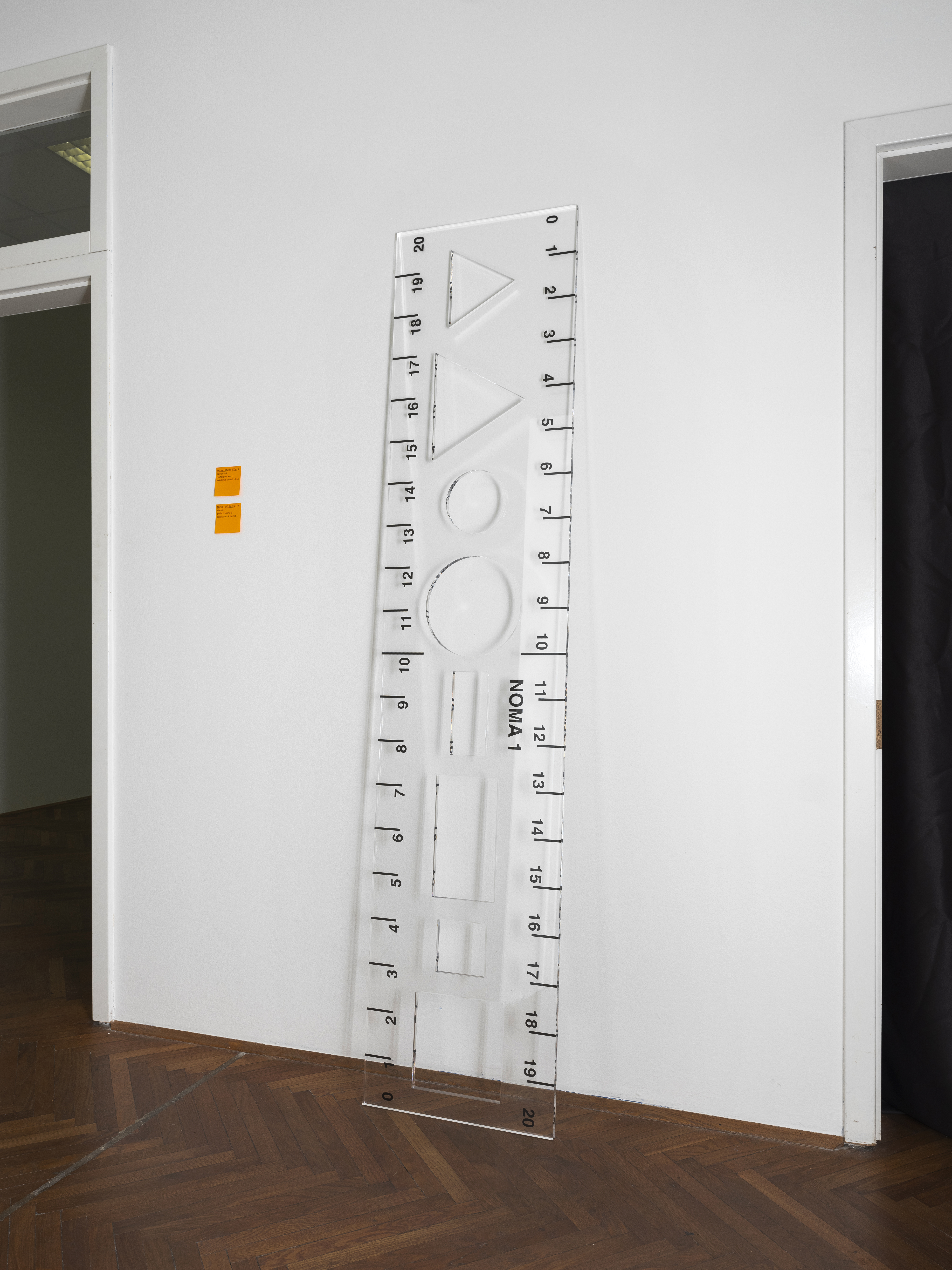
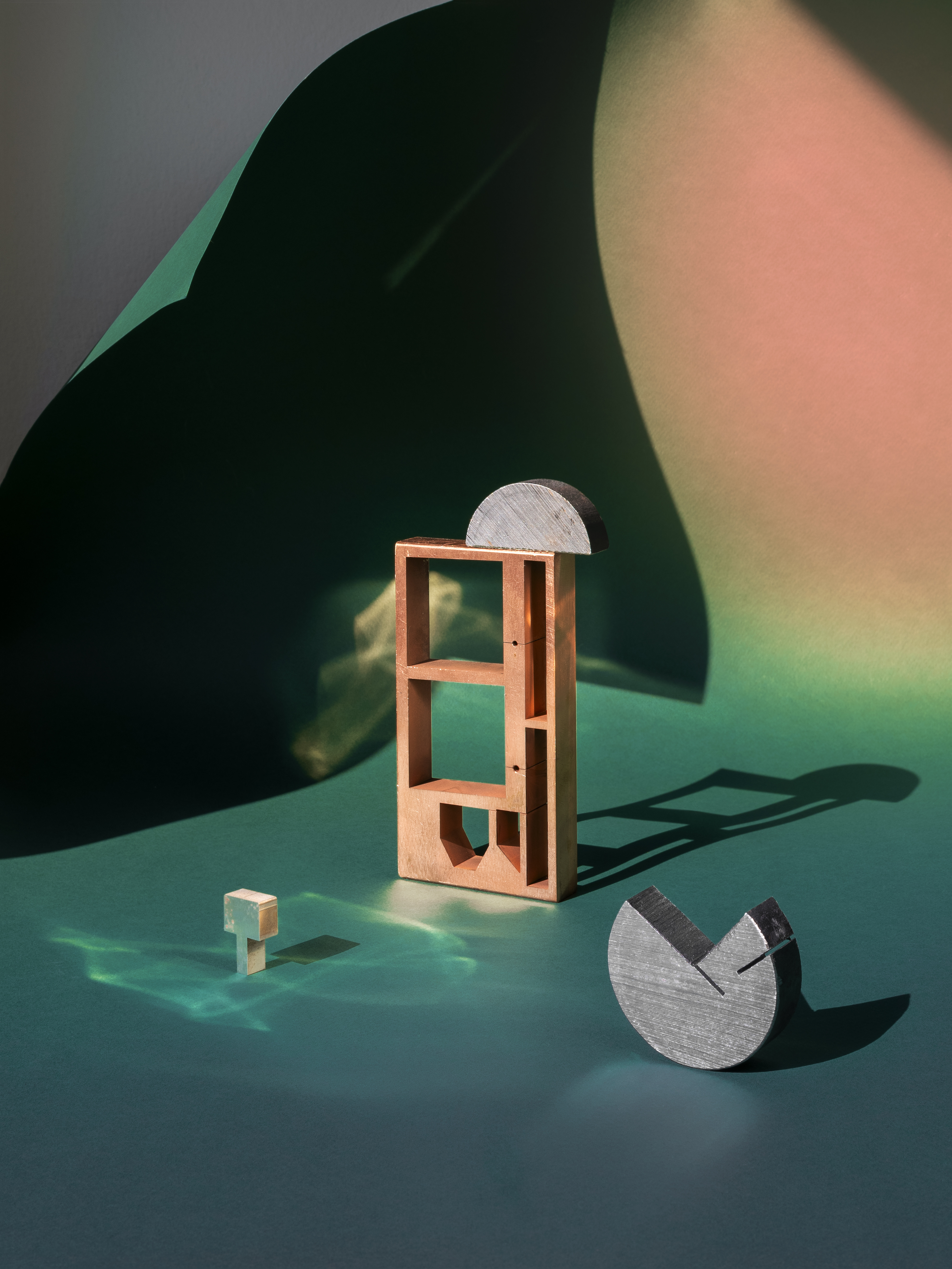
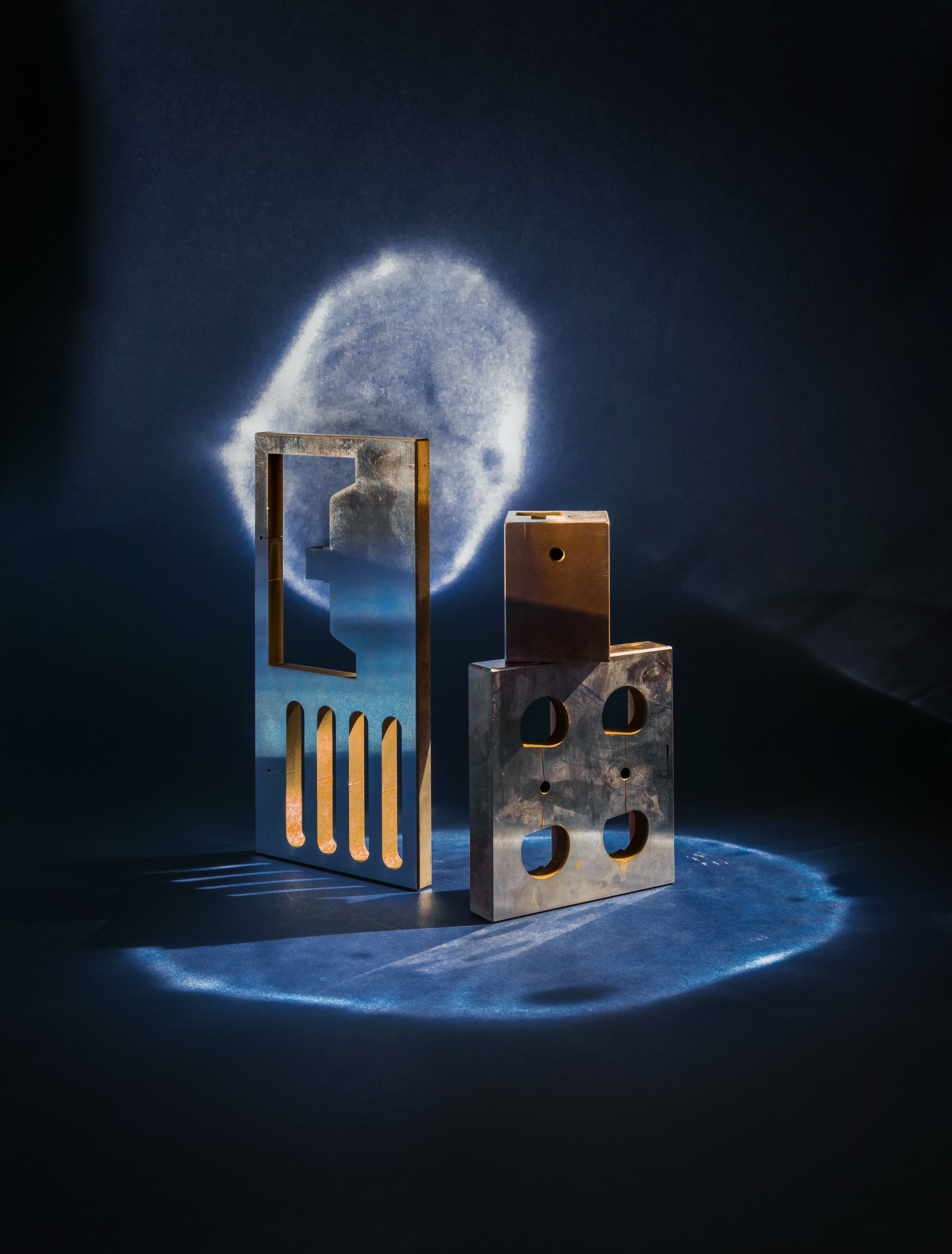
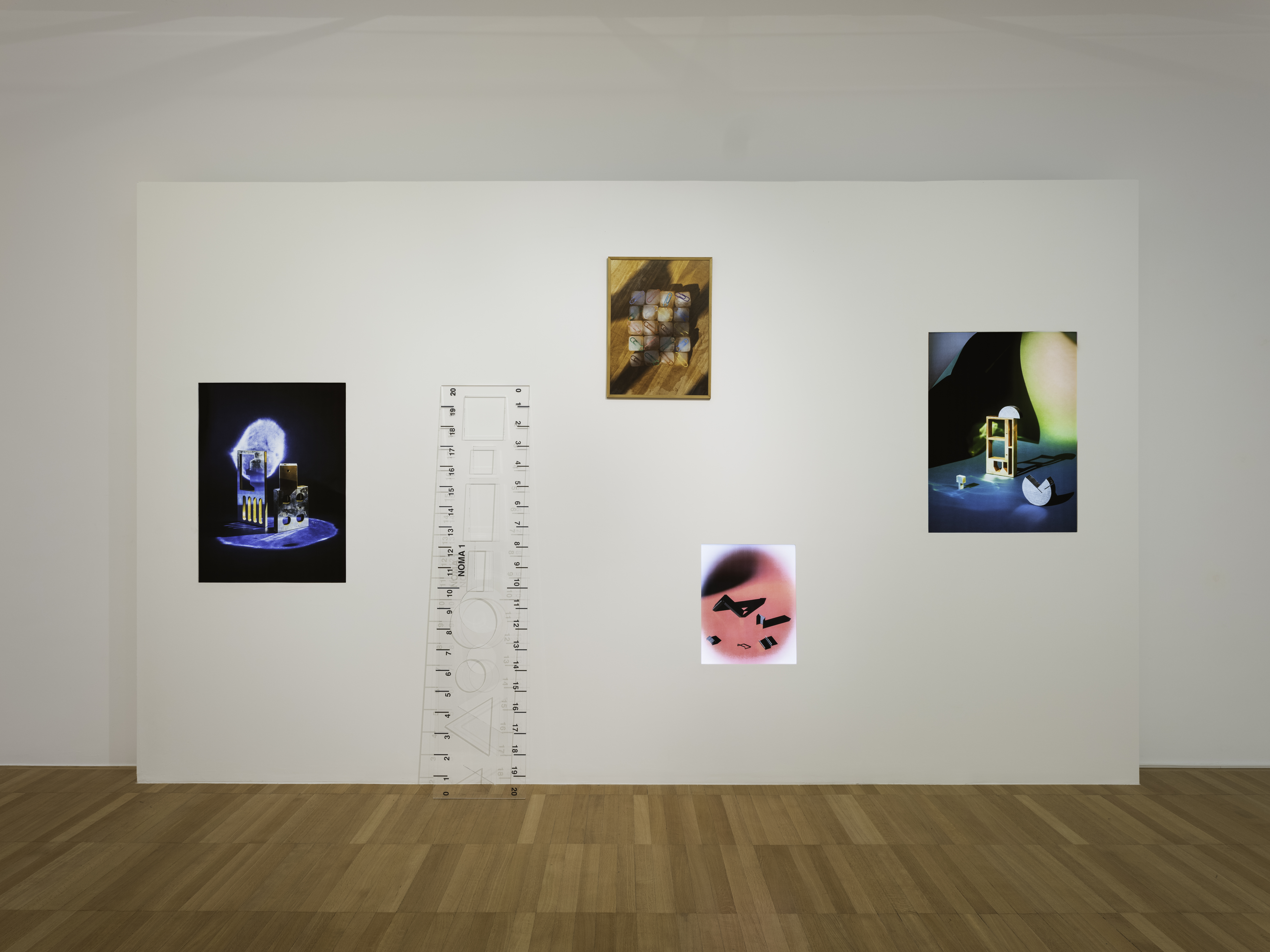
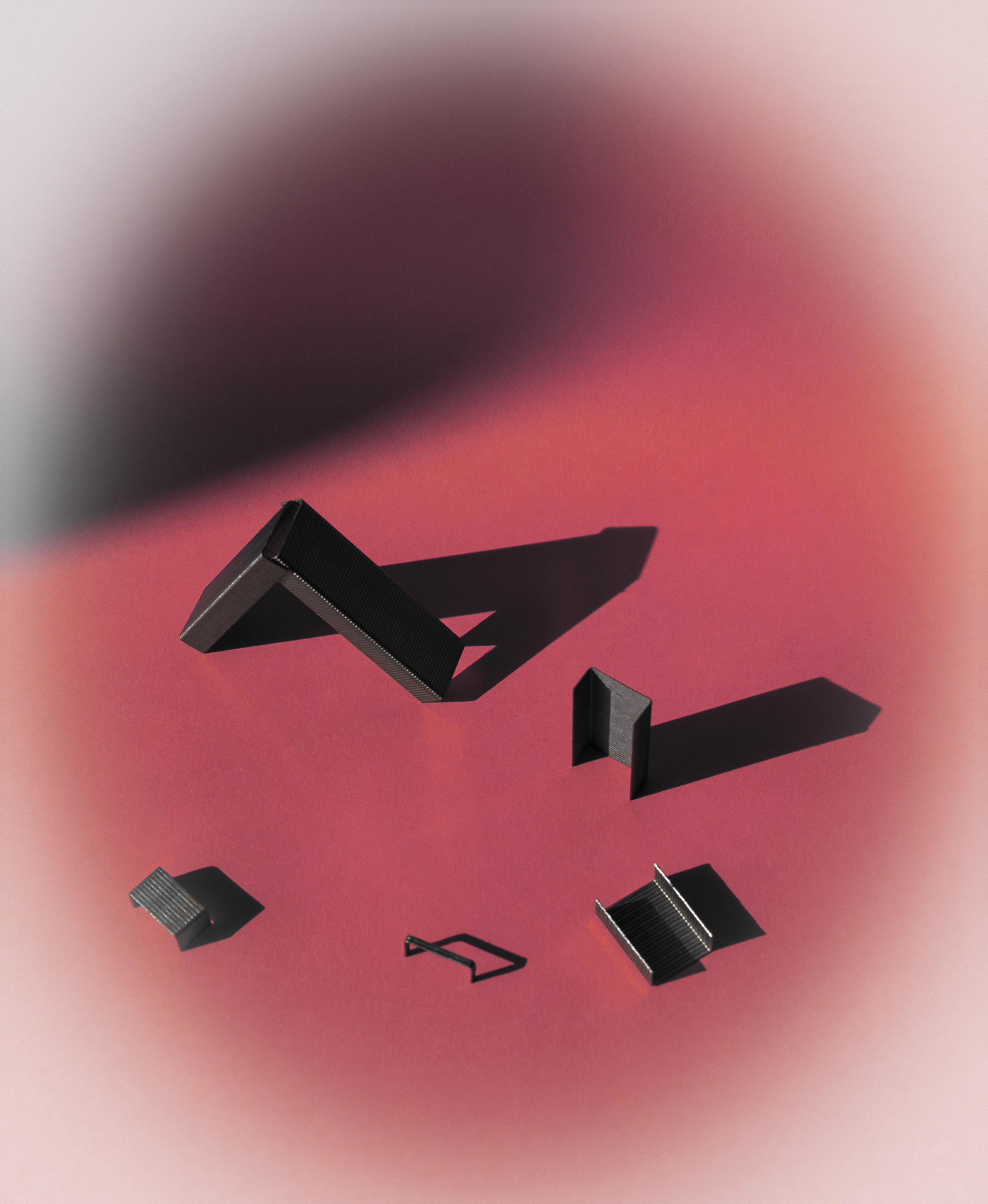
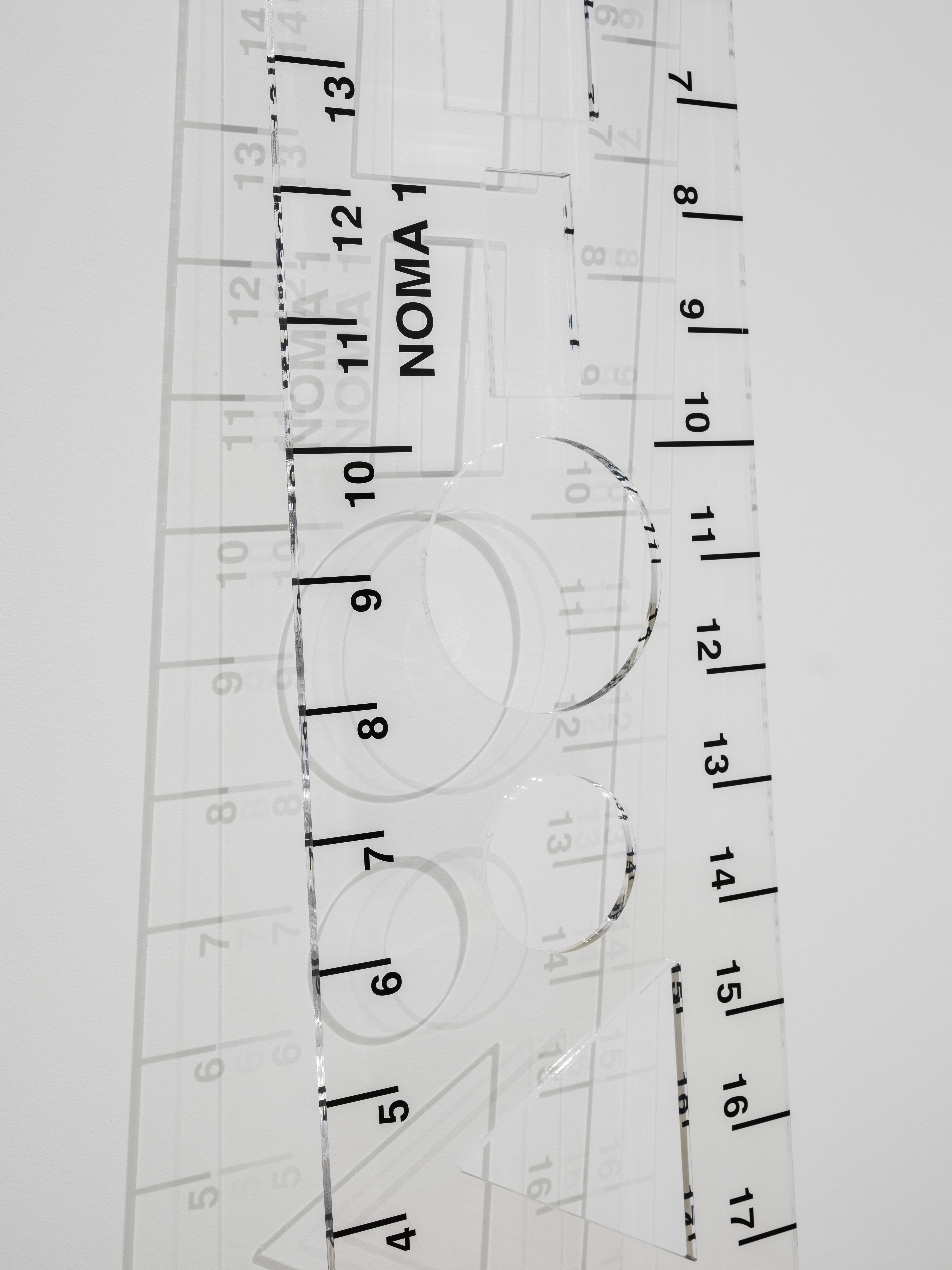
We are immediately transported back to school by an enormous ruler (Noma 1 (10:1), 2024), an object magnified to ten times its size, brought directly from the artist’s (and our own) childhood into the museum space. This ruler combines two important principles of Rosc’s game: on the one hand, the almost comically large object appears playful at first, while on the other it points to the perfectionism the artist brings to her work. The same is true of her photographs, featuring geometrical and school-related objects in dramatically illuminated compositions. Throughout Rosc’s practice, this type of desire for control is recurrent, manifesting at times in the repetition of her memories and appropriation of her family environment, and at others in the technical precision she builds on again and again.
The question at hand is therefore how one can evaluate one’s position in the liminal space between youth and adulthood. Seeking an answer to this, Rosc concentrates on the rules of the game in the field of photography but also generally – to find a way to function and survive as an artist and introduce elements of play into an exhausting system that is constantly demanding more and more from us. Perhaps the solution lies in establishing her own rules that, paired with a skillful use of light, unusual materials, and shifting between the monumental and minimalist, test alternative modes of existence in the microcosm of an exhibition.
Hana Čeferin
Lucija Rosc belongs to the generation often called “emerging” in the art world (although it is not entirely clear when exactly the transition into “established” occurs, or if there might be anything in between) – which, coincidentally, I also happen to belong to. Our generation shares a number of traits: we are overwhelmed by environmental anxiety and financial instability, by the alarming drift into political conservatism, and by the nonexistence of affordable housing. Characteristically, we do not march toward “adulthood” with the most confident of steps, and find the boundary between youth and maturity hazy at best, if not downright invisible. In this vein Rosc’s new project plays with the idea that the rules we live by are malleable and unstable, and that the concept of uninhibited play might be transferrable into adulthood.
Rosc’s photographic practice is an open process of constantly changing materials, techniques, and methods. Nonetheless, her projects have at least one common denominator: she always approaches her subjects with humor and play, transforming even serious topics into associative images one can easily relate to. In the works shown in Moderna galerija, the artist continues to explore her memories (a frequent subject in her practice) and to experiment with elevating humble, everyday objects into monumental versions of themselves. This time, she is focusing on spaces that occupy a kind of transitional position, such as the school – a place intended for structured learning and the acquisition of skills on the one hand, and on the other, for play and leisure. Moreover, it is a place that represents a boundary between different stages in life. Through this contradictory space of expectation, the artist questions her own attitude to the past and the rules it imposed on her.
We are immediately transported back to school by an enormous ruler (Noma 1 (10:1), 2024), an object magnified to ten times its size, brought directly from the artist’s (and our own) childhood into the museum space. This ruler combines two important principles of Rosc’s game: on the one hand, the almost comically large object appears playful at first, while on the other it points to the perfectionism the artist brings to her work. The same is true of her photographs, featuring geometrical and school-related objects in dramatically illuminated compositions. Throughout Rosc’s practice, this type of desire for control is recurrent, manifesting at times in the repetition of her memories and appropriation of her family environment, and at others in the technical precision she builds on again and again.
The question at hand is therefore how one can evaluate one’s position in the liminal space between youth and adulthood. Seeking an answer to this, Rosc concentrates on the rules of the game in the field of photography but also generally – to find a way to function and survive as an artist and introduce elements of play into an exhausting system that is constantly demanding more and more from us. Perhaps the solution lies in establishing her own rules that, paired with a skillful use of light, unusual materials, and shifting between the monumental and minimalist, test alternative modes of existence in the microcosm of an exhibition.
Hana Čeferin